Why is there water on the basement floor when the sump pit is dry?
Answered by the column’s editors · · about 5 minutes to read
Water in the basement with a dry sump pit means the water never reached the pit. It's coming in above or around the drainage, leaking from a pipe or appliance, or condensing out of humid summer air.
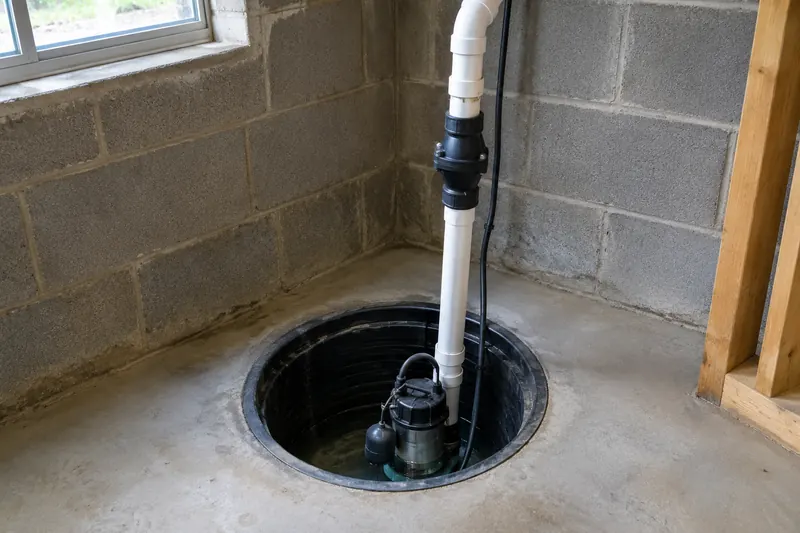
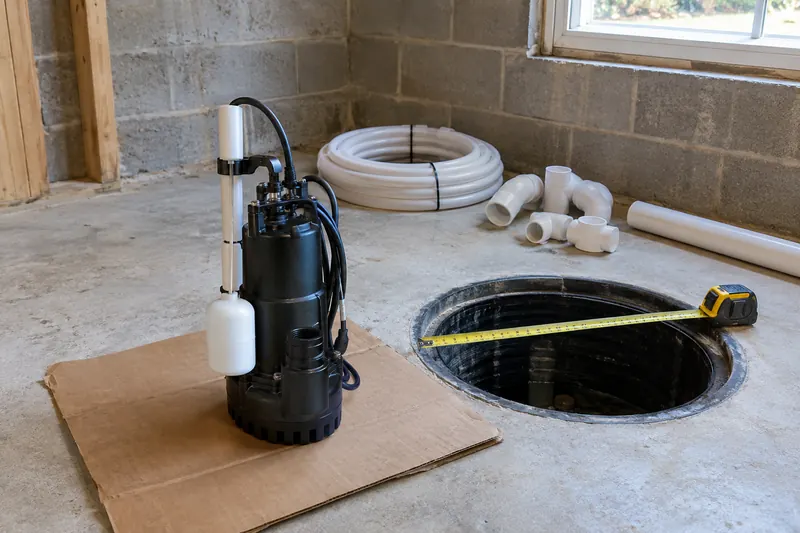
A sump pump can only move water that finds its way into the basin. Liberty Pumps describes the basic cycle: water flows into the pit until the float switch turns the pump on (Liberty Pumps FAQ). A dry pit with a wet floor tells you the water took another route, or that it isn't groundwater at all.
That narrows the list to three suspects, and each leaves its own fingerprints.
Why would groundwater skip the sump pit?
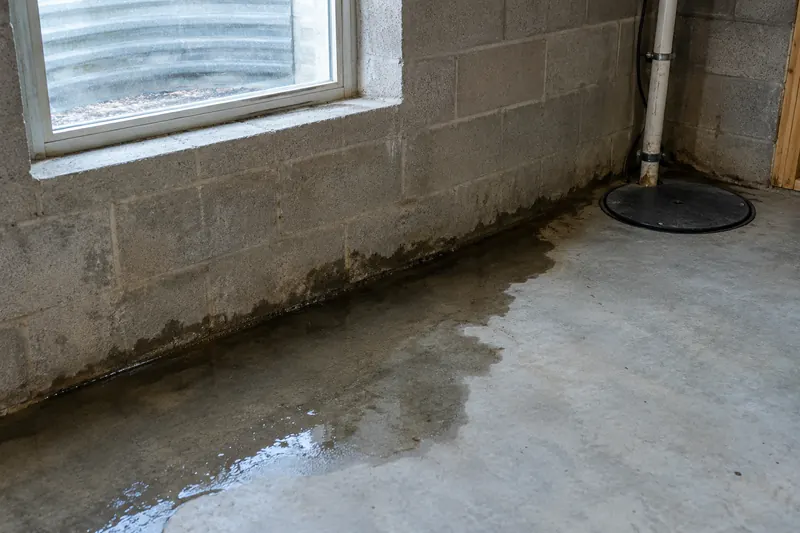
A pit only collects what the drainage around and under the slab delivers to it. If water comes in higher up, it can run across the floor and never get near the basin. The usual entry points are the joint where the wall meets the floor, cracks in the wall or slab, around pipes that pass through the foundation, and window wells that fill in a storm.
Roof and sump water dumped right beside the house makes this worse. A downspout or discharge pipe that empties against the foundation sends the same water back toward the walls. Lenexa, Kansas, which is not in Maryland, recommends sump discharge end at least 5 feet from the foundation (City of Lenexa). Maryland rules vary by place, so check where the discharge is allowed to go here.
Some older houses have a pit with little or no drain tile feeding it, so it stays dry even in wet weather. If yours has never had water in it, that may be why.
Could it be a plumbing leak instead?
Very often, yes, especially when the water appears in dry weather. Check the usual suspects: the water heater, washer hoses and the standpipe, supply lines overhead, the softener and the furnace or AC condensate line. A puddle that keeps returning in the same spot under an appliance is rarely groundwater.
A tank that's weeping at the base is its own problem; see a water heater leaking from the bottom. Condensate and dehumidifier lines that pop off or overflow are another frequent cause, and our page on condensate and dehumidifier drains covers where they should run. In WSSC homes, the code doesn't require a pan under a basement water heater (WSSC Water code, archived copy), but one will catch a slow leak before it spreads.
Could the water just be condensation?
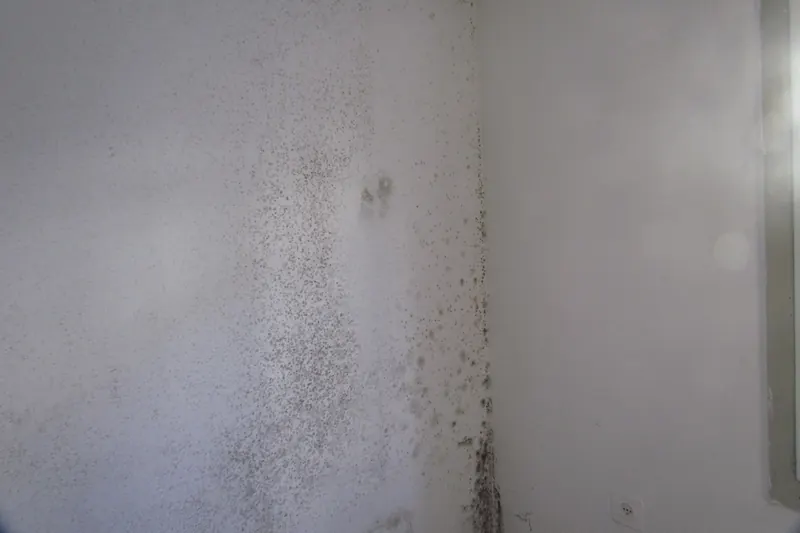
In a Maryland July, absolutely. Warm, humid air hits cool concrete and cold-water pipes and leaves water behind, the same way a cold glass sweats. Sweating pipes drip onto the floor, and a slab can look damp across a wide area with no leak anywhere.
EPA's target is relative humidity under 60 percent, with 30 to 50 percent the ideal range (EPA). EPA also suggests insulating cold surfaces such as piping and floors to cut condensation (EPA: Ten Things About Mold). A dehumidifier helps, though ENERGY STAR notes frost can form on its coils below about 65°F, so a cool basement may need a low-temperature model.
| Where it appears | Most likely source | Quick check |
|---|---|---|
| A stripe along the base of a wall after rain | Seepage at the wall-floor joint | Dry it and see if it returns with the next storm |
| A patch under or beside an appliance | Plumbing or appliance leak | Wipe dry, put paper towels down, check in an hour |
| Drips along a line under the ceiling pipes | Sweating cold-water pipes | Feel the pipe; beads of water on it in humid weather |
| Damp sheen over much of the slab in summer | Condensation on cool concrete | Tape down a square of plastic for a day |
| Around the floor drain | Drain backup | Look for dirt rings or a sewer smell |
How do we find the source?
A two-day test
- Dry the floor completely and note exactly where the water was.
- Tape a square of clear plastic tightly to the floor or wall in the wet spot and leave it for a day or two.
- If moisture forms under the plastic, water is coming through the concrete; if it forms on top, it's condensation from the room air.
- Lay paper towels under the water heater, washer, softener and any overhead joints, and check them after a few hours.
- Walk outside in the next rain and see where downspouts and the sump discharge actually drop their water.
If the test points to seepage, the fix is outside (grading, gutters, downspouts) or a drainage contractor. If it points to plumbing, call a licensed plumber. If it's condensation, it's a humidity job.
Will insurance cover this kind of water?
Usually not. The Maryland Insurance Administration says seepage through a foundation wall or floor is treated as a maintenance issue and generally isn't covered by flood or homeowners policies (Maryland Insurance Administration, archived copy). A sudden pipe or appliance leak is a different conversation with your insurer.
Whatever the source, don't let it sit. Wet drywall, carpet and boxes start growing mold after a leak quickly, and EPA's drying window is 24 to 48 hours.
The bottom line
A dry pit under a wet floor isn't a pump problem. Rule out appliance and pipe leaks first, test for condensation with a sheet of plastic, and then look at how rain and roof water reach the walls. Dry everything within a day or two while you investigate.
Readers also ask
Could a broken sump pump cause a dry pit and a wet floor?
Not usually. A failed pump leaves a full pit. A dry pit means the water isn't arriving there.
Why is the floor wet only in summer?
That pattern points to condensation: humid air on cool concrete. Run a dehumidifier and watch the humidity.
Should we drill a hole to let water into the pit?
No. Ask a drainage contractor whether the pit is connected to any drain tile before changing anything.
Is a wet floor near the furnace a plumbing problem?
Often it's the condensate line. Check whether the drain tube has popped loose or the condensate pump has stopped.
Where this answer comes from
- Liberty Pumps FAQ, page 33: how water reaches the basin
- City of Lenexa, Kansas: sump pump guidance for residents
- WSSC Water: amended pan rule in its current code (archived copy)
- EPA: humidity targets for a dry home
- EPA: ten things you should know about mold
- ENERGY STAR: choosing and draining a dehumidifier
- MIA (archived copy): seepage treated as maintenance