Where is our sump pump allowed to send the water?
Answered by the column’s editors · · about 5 minutes to read
Where should sump pump discharge go? Outdoors, onto ground that carries it away from your foundation. Never into a floor drain, laundry sink or sewer cleanout: WSSC's code lists that as an illegal discharge.
Here's the thing: the easy spot to dump sump water is usually the wrong one. A floor drain or laundry tub is right there in the basement, and it's tempting to run the pump's hose into it. In Montgomery and Prince George's counties that's a code violation, and it's a bad idea everywhere else too.
The right answer is outside, somewhere the water can soak in or run off without coming straight back toward your walls or onto a neighbor's sidewalk. The exact spot is a local question, and a few local offices decide it.
Why can't the sump pump drain into the sewer?
Because the sanitary sewer is built to carry wastewater to a treatment plant, not rain and groundwater. Section 116.4 of WSSC Water's current plumbing code lists foundation drains and foundation sump pumps among illegal sewer connections and discharges, alongside storm water and ground water from any source. WSSC's customer FAQ puts it in plain words: never connect a sump pump to sewer lines (archived copy).
There's a self-interest angle too. Rainwater pushed into sewer pipes during a storm takes up room meant for everyone's wastewater, including yours. If you've had that happen, read why sewage comes up through a floor drain.
Louisville's sewer district in Kentucky, which isn't our area, makes the same point in the short video below.
So where outside should sump pump discharge go?
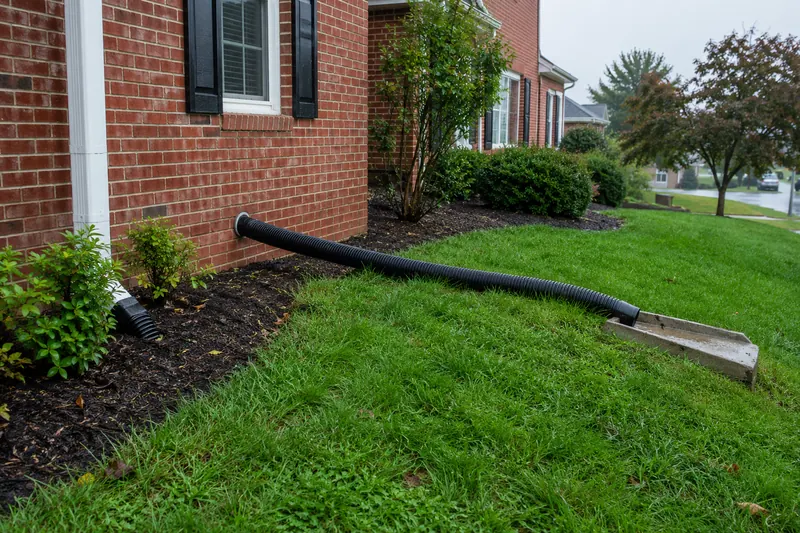
Somewhere the ground slopes away from the house, far enough out that the water doesn't simply soak back down along the foundation and into the pit. That loop is one reason a pump can seem to run nonstop; see why a pump cycles every few minutes in dry weather.
We didn't find a Maryland county page that sets a distance, so we won't invent one. For a sense of what local rules can look like, Lenexa, Kansas recommends discharging at least 5 feet from your foundation onto ground that slopes away. That's a Kansas city's advice, not a Maryland rule; ask your county before you rely on any number.
| Destination | Allowed? | Who decides |
|---|---|---|
| Floor drain, laundry sink, sewer cleanout | No; an illegal discharge under WSSC code Section 116.4 | WSSC Water in Montgomery and Prince George's; county elsewhere |
| Your yard, sloping away from the house | Generally the intended spot | County rules on distance and grading |
| Street drainage system (Montgomery) | Only with a Department of Permitting Services permit | Montgomery County DPS |
| Sidewalk or roadway | Complaints are investigated if it creates a hazard | Montgomery County DHCA |
| Neighbor's property | DHCA won't step in unless it causes a hazard | Montgomery County DHCA |
Can sump water go into the street or the storm drain?
In Montgomery County, not by just running a pipe to the curb. The county's 311 guidance says tying a sump pump into the existing street drainage system takes a permit from the Department of Permitting Services. The same page says complaints about sump water running onto sidewalks or roads and creating a hazard go first to the Department of Housing and Community Affairs.
Outside Montgomery, we didn't confirm equivalent rules for Prince George's, Howard, Anne Arundel, Frederick or Baltimore County. Call your county's permit office before connecting to anything at the street; who issues plumbing permits where you live has the offices. In winter, a sheet of discharge water freezing on a sidewalk is exactly the kind of hazard that draws complaints.
What about water running into the neighbor's yard?
Montgomery County's 311 page says DHCA won't handle complaints about sump water discharging onto adjoining property unless it specifically causes a hazard. That's a limit on what the county will investigate, not permission. Aiming your discharge at a neighbor's yard is a fast way to start a dispute, and it's easy to avoid by keeping the outlet and its splash area on your own lot, pointed downhill and away from the property line.
How do you check where your pump drains now?
Follow the pipe. A previous owner's shortcut can still be in place.
Trace your discharge line
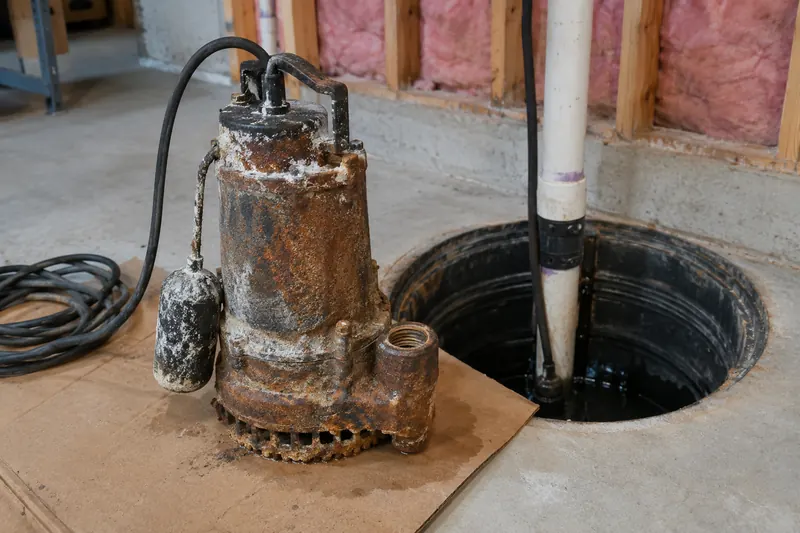
- Find where the discharge pipe leaves the pit, just above the check valve.
- Follow it to where it exits the house, and note any branch heading into a drain or sewer pipe.
- Pour water into the pit until the pump starts, then go outside and watch where the water lands.
- Check that the ground there slopes away from the house and stays on your property.
- If the line ties into a floor drain, laundry sink or sewer pipe, have a licensed plumber reroute it outdoors.
If you add a water-powered backup pump later, its outlet has rules of its own, so plan the outdoor discharge with both pumps in mind.
The bottom line
Sump water belongs outside, on ground that carries it away from your foundation and off sidewalks and neighbors' yards. In WSSC territory, sending it into the sanitary sewer is an illegal discharge. For connections to street drainage, or any rule on distance, ask your county before you dig.
Readers also ask
Can the sump pump drain into the laundry sink?
No. A laundry sink drains to the sanitary sewer, so it's the same illegal discharge under WSSC's code as piping the pump straight into a sewer line.
Can sump water go into the downspout drain line?
Only if that line ends outdoors or in storm drainage, and Montgomery requires a permit for street drainage tie-ins. WSSC disallows downspout inflow to the sewer too, so trace the line first.
Is it legal to run sump water onto the sidewalk?
In Montgomery County, discharge that creates a hazard on a sidewalk or road can be investigated by DHCA. Winter ice is one way that happens.
Does WSSC check for sump pumps connected to the sewer?
WSSC's code lists the connection as illegal and its customer FAQ calls it a violation. We didn't find details of a routine inspection program; the rule applies either way.
Can a sump pit with a radon system still drain?
Yes. According to EPA's radon guide, the pit can be sealed with a cap and keep draining while serving as the suction point for a radon pipe. The pump's discharge rules stay the same.