Something's backing up or smells
Why is sewage coming up through our basement floor drain?
Answered by the column’s editors · · about 5 minutes to read
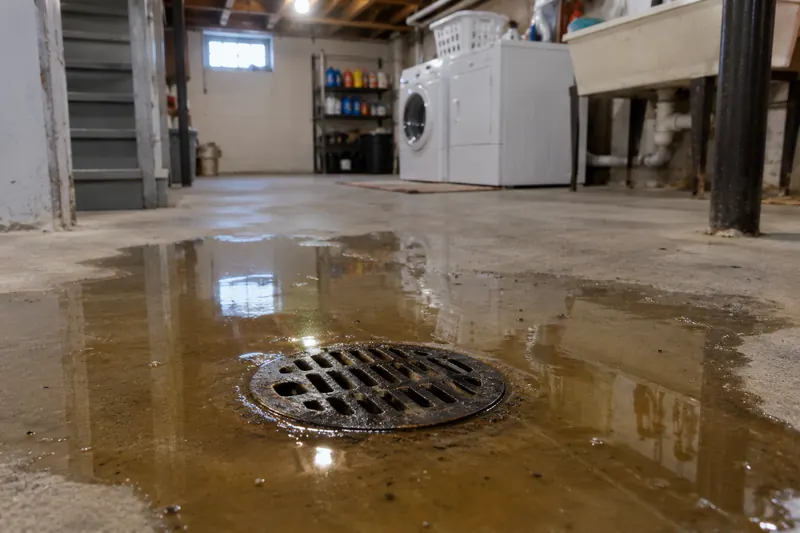
Sewage backing up through a basement floor drain means wastewater can't get out of the house: either your own sewer line is blocked, or the public sewer is overloaded and pushing back. The floor drain is simply the lowest opening.
It's one of the worst things to find at the bottom of the stairs, and the cause is almost always downstream. The floor drain isn't broken: when the pipe to the street can't carry the flow, dirty water rises and spills out at the lowest point in the house.
The two questions that matter right now are whether the blockage is in your pipe or the public one, and how to keep anyone from adding more water while it's sorted out.
Why does sewage come up the floor drain first?
Water seeks its own level. NDSU Extension explains that when sewage or floodwater in the sewer rises higher than a home's drains, those drains back up, and the basement ones go first because they're lowest (NDSU Extension). Basement showers, tubs, sinks, laundry drains and toilets can all let sewage in the same way.
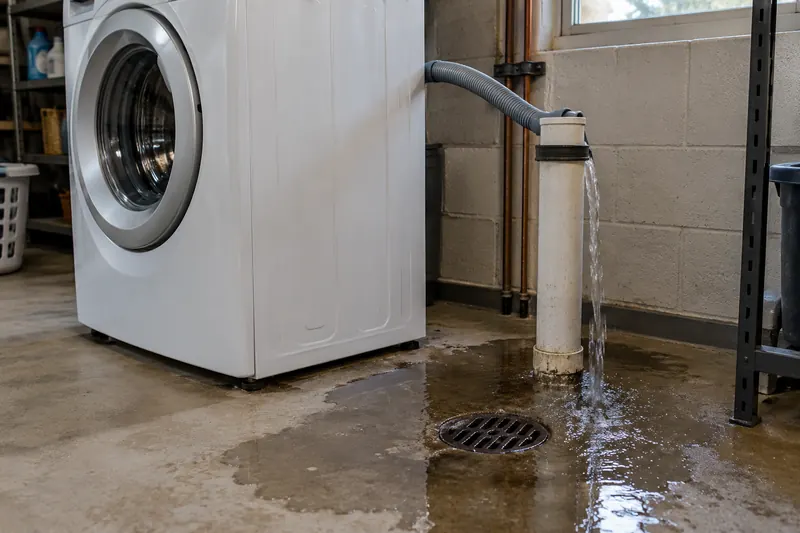
That's also why running the washer or flushing upstairs makes it worse. Every gallon you send down has nowhere to go but back out of that floor drain.
Is the sewer backup in the floor drain our blockage or the public sewer's?
The pattern usually tells you.
| What you notice | Points to | Who handles it |
|---|---|---|
| Backs up when you run the washer, shower or flush; dry weather | A blockage in your own building sewer | A licensed plumber or drain cleaner |
| Only your house is affected | Your line, most likely | A licensed plumber or drain cleaner |
| Happens during heavy rain, with neighbors reporting the same | The public sewer overloaded and surcharging | The utility or local public works, plus your plumber to confirm |
| Water rises even when nobody in the house is using any fixture | The public sewer pushing back | Your plumber confirms, then WSSC or your county takes the public side |
On the private side, the usual culprits are tree roots, grease poured down the kitchen sink, and wipes that don't break apart. Grease goes down warm, then cools and hardens on the pipe walls.
Who clears the main line, and who pays?
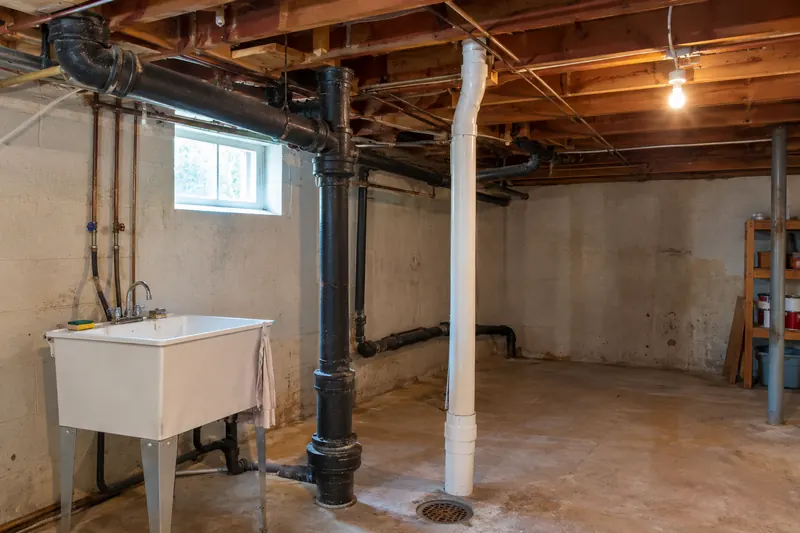
Your part of the line gets cleared by a licensed plumber or drain-cleaning contractor, usually through the cleanout near where the building drain leaves the house. The 2012 model plumbing code calls for a cleanout near that junction, brought up to the basement floor or grade, and for cleanouts on building sewers at least every 100 feet (2012 IPC text).
Across Montgomery and Prince George's, WSSC Water puts the owner in charge of the sewer service between the house and the property line, and plumbers and sewer drain cleaners working there must be WSSC-registered (WSSC Water, archived copy). WSSC only accepts blockage reports from registered plumbers. A clog on WSSC's side gets cleared free, but you still owe the plumber.
Elsewhere, the county or city public works department handles the public side; in Baltimore City, backups are reported through 311. The details of who owes what are in who pays when the sewer backs up.
What should we do while we wait for help?
Right now
- Stop all water use in the house: no flushing, showers, laundry or dishwasher.
- Keep children and pets out of the basement.
- Photograph the water, the drain and anything damaged.
- Call a licensed plumber or drain cleaner, and tell them whether it rained.
- Call your insurer and ask whether you have a sewer back-up endorsement.
Once the line is flowing again, the cleanup has its own rules: what to throw out, how to disinfect and which bleach ratio to use. Follow the sewage cleanup steps before anyone uses the basement again.
How do we keep it from happening again?
If the cause was a private blockage, the fix is maintenance: keep grease and wipes out of the drains, and ask the plumber whether roots will keep coming back. If the public sewer surcharges in storms, a backwater valve is the usual answer. The code requires one when fixtures sit below the next upstream manhole cover, and it's a licensed-plumber job with a permit; see whether you need a backwater valve.
A cheaper partial measure, per NDSU: a floor-drain plug whose float seals against backflow yet lets water out. Before the next storm, check your policy: per the Maryland Insurance Administration, sewage through a drain needs the optional back-up endorsement (Maryland Insurance Administration, archived copy). More in our insurance answer for backups.
The bottom line
Sewage at the floor drain means the line out of the house can't carry the flow. Stop using water, keep people out, and call a licensed plumber or drain cleaner to clear the line; the utility or your county handles the public side. Then clean up safely and decide whether a backwater valve makes sense.
Readers also ask
Can we snake the line ourselves?
WSSC says homeowners may snake their own line, but a backup with sewage on the floor is a job for a pro with the right equipment and protective gear.
Will drain cleaner chemicals fix it?
Not a main line blockage, and they make the water more hazardous for whoever opens the cleanout.
Why did it happen only once, during a big storm?
That points to the public sewer surcharging, which is what a backwater valve is for.
Is it safe to use the upstairs bathroom?
No. Upstairs drains share the same pipe.
Could the sump pump be connected to the sewer?
It shouldn't be. Under WSSC's code, piping a foundation sump into the sanitary sewer is illegal, and the extra water can overload the line.
Where this answer comes from
- NDSU Extension AE1476: plugging home drains against sewage backup
- WSSC Water: sewer blockages, backups and who maintains what (archived copy)
- ICC 2012 IPC, plain-text copy at the Internet Archive
- DC Water: backwater valve rebate and eligibility
- Maryland Insurance Administration on back-up endorsements (archived copy)
- CDC: disaster cleanup protective gear
- WSSC Water: illegal sewer connections in the current code (archived copy)