Something's backing up or smells
Why do the basement drains gurgle when someone flushes upstairs?
Answered by the column’s editors · · about 5 minutes to read
Basement drain gurgling when a toilet is flushed upstairs means air is being pulled through a trap, usually because a vent is blocked or the drain line below is partly clogged.
A flush sends a slug of water down the stack. As it falls, it pushes air ahead of it and drags air behind it. Plumbing vents exist to feed and relieve that air, and when they can't keep up, the system borrows air from the nearest trap. The water sitting in the basement drain's trap bubbles and glugs.
So the gurgle is a symptom, not the problem. An occasional burble after a big flush is usually nothing. When it's new, happens every time, or comes with slow drains or a smell, something has changed in the vent or the line downstream.
Why do basement drains gurgle when the toilet flushes?
The model plumbing code sets a simple limit: the vent system has to keep the pressure difference on any trap seal to no more than 1 inch of water column. A trap holds a water seal 2 to 4 inches deep. If a flush pulls harder than the vents allow for, air bubbles through that seal or water gets sucked out of it. That's the sound you hear.
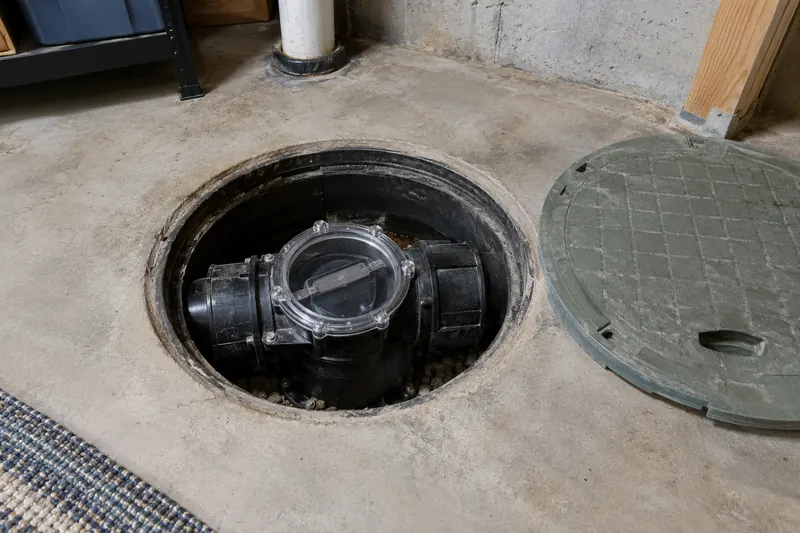
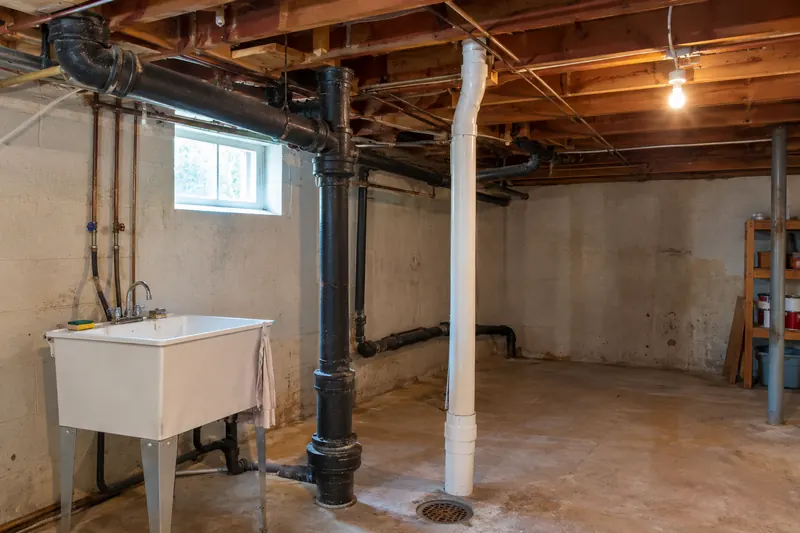
Basement drains are the usual victims because they're lowest on the line. NDSU Extension explains that in a drain system water seeks the lowest level, and the floor drain, laundry sink or basement shower nearest the main is where strain shows first.
Is it a vent problem or a clog?
Both make the same noise. The pattern around the noise tells you which.
| What you notice | More likely | What to do |
|---|---|---|
| Gurgle on every flush, drains run at normal speed | Blocked or undersized vent | Plumber checks the vent, often from the roof |
| Gurgle plus slow basement drains | Partial clog in the building drain | Have the main line cleared |
| Floor drain water rises when upstairs fixtures run | Restriction downstream of the floor drain | Ease off water use and call a drain cleaner |
| Gurgle followed by a sewer smell | Trap seal being pulled dry | Refill the trap, then fix the cause |
| Gurgle only in heavy rain | Street sewer running full | Ask about a backwater valve |
What can we check ourselves?
A fair amount, and you won't need tools.
A ten-minute gurgle check
- Flush the upstairs toilet and listen at each basement drain to find the loudest one.
- Run the basement laundry sink or shower for a minute and watch the floor drain.
- Pour a bucket of water into the floor drain and note how fast it goes down.
- Sniff that drain an hour later; a sewer smell means the trap seal is being lost.
- Note whether the gurgling gets worse during heavy rain.
- Write down what you found and hand the list to your plumber.
If a drain smells, start with water. North Dakota's environmental agency says sewer gas indoors usually comes from leaking plumbing or a dry trap in a drain that's rarely used, and the fix for a dry trap is to pour water in. If the trap keeps going dry after flushes upstairs, the gurgling is the cause, and the trap needs a working vent behind it. There's more in why a floor drain smells like sewer.
Can a basement bathroom or ejector cause gurgling?
It can. Drainage piping below the level of the sewer has to be vented the same way as a gravity system under the model code, and an ejector basin must be sealed and vented. In WSSC territory, an air admittance valve can't be used to vent a sump or tank unless an engineer designed the vent system (2024 WSSC code). If the gurgling started after a basement bathroom went in, ask whether its venting was inspected; why a basement bathroom smells covers the related trouble.
Changing vents is a job for a licensed plumber. WSSC Water says that in its two counties, the bulk of plumbing work belongs to a WSSC-licensed plumber.
When does gurgling turn into a real problem?
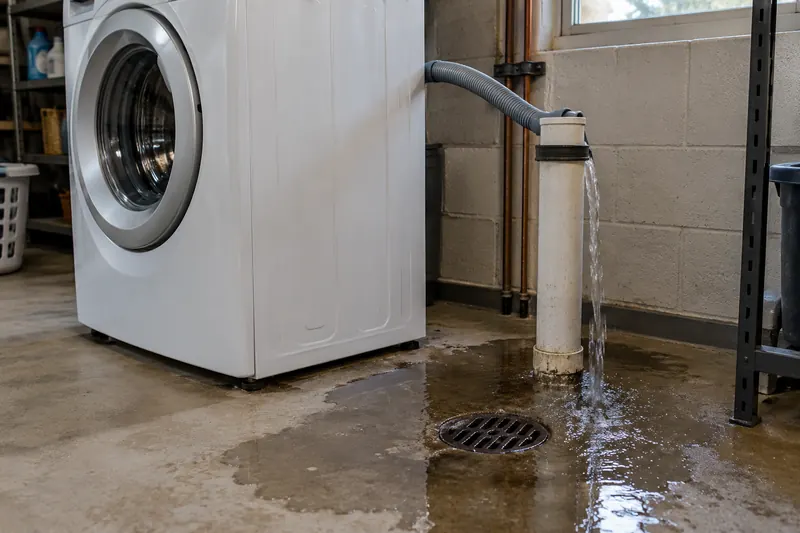
When water starts showing up where it shouldn't. If the floor drain rises when the washer empties, that's covered in why the floor drain overflows on wash day. If what rises is sewage, stop using water and read why sewage comes up the floor drain.
In WSSC territory, a stoppage between the house and the main is the owner's to clear, and the code says the job goes to a WSSC-licensed master plumber or licensed drain cleaner. Gurgling is the cheap warning before that bill gets bigger. If it only happens in storms, the street sewer may be running full, and a backwater valve is the question to raise.
The bottom line
Gurgling means air is being pulled through a trap. Occasional noise after a big flush is usually harmless; new or constant gurgling, slow drains or a smell point to a blocked vent or a building drain that's narrowing. Do the listening check, then have a licensed plumber look at the vent and the main line before it becomes a backup.
Readers also ask
Is a gurgling drain dangerous?
Not by itself. The concern is what it leads to: a trap pulled dry lets sewer gas into the basement, and a growing clog can end in a backup.
Can we add an air admittance valve ourselves?
That's a job for a licensed plumber. In WSSC territory, an air admittance valve can't vent a sump or tank unless an engineer designed the system.
Why does it only gurgle when it rains hard?
A sewer running full in a storm can push and pull on house drains. If that's the pattern, ask a plumber whether your basement sits low enough to need a backwater valve.
Should we pour water into the floor drain regularly?
For a drain that rarely gets used, yes. The model code calls for a trap seal primer where a trap seal can be lost to evaporation, and WSSC's code points to that requirement too.
Does gurgling mean the vent on the roof is blocked?
It's one possibility. If the drains also run slowly, a partial clog in the building drain is more likely, so mention both to the plumber.