Why does the basement bathroom smell even though it's clean?
Answered by the column’s editors · · about 5 minutes to read
A basement bathroom that smells like sewer while looking spotless has a gas problem, not a cleaning problem: usually a dried-out trap, an ejector lid that isn't sealed, a vent that isn't working, or plain damp.
Scrubbing won't fix it, because the smell isn't coming from the surfaces. Most often it's sewer gas getting past one of the barriers meant to keep it inside the pipes. Sometimes it's a musty basement odor that people read as sewage.
The rotten-egg note in sewer gas is mostly hydrogen sulfide, and the nose is very good at catching it. The ATSDR says people can usually smell it at levels from 0.0005 to 0.3 parts per million, so even a small leak is easy to notice.
Could a dried-out trap be the cause?
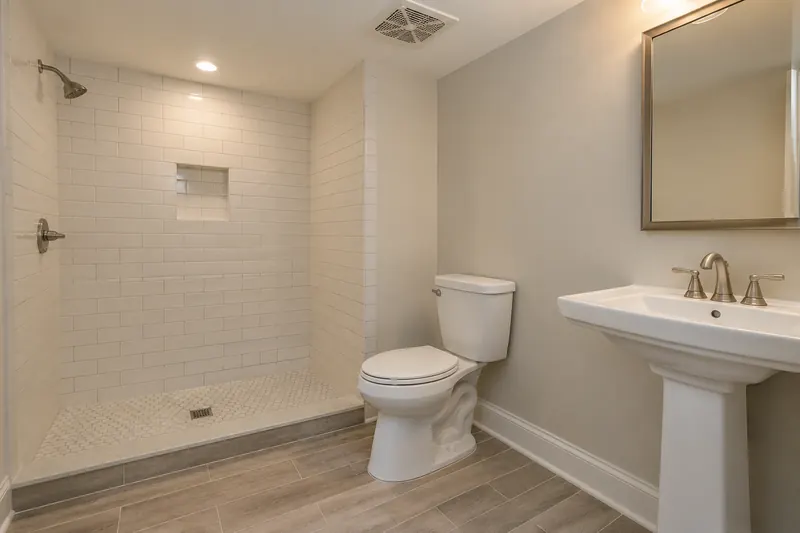
Every drain has a trap, a bend that holds water as a seal against sewer gas, and the model code sets the water depth of that seal at 2 to 4 inches. If a seal is likely to dry out, the code wants a trap primer that refills it automatically (ICC, 2012 IPC).
A shower in a guest bath nobody uses, or a floor drain in the next room, can dry out in a few quiet weeks. North Dakota's environmental agency puts dry traps in rarely used drains near the top of its list for indoor sewer gas, and its fix is simple: pour water down the drain. If the floor drain is the culprit, our page on a floor drain that smells like sewer goes further.
Is the ejector basin lid sealed?
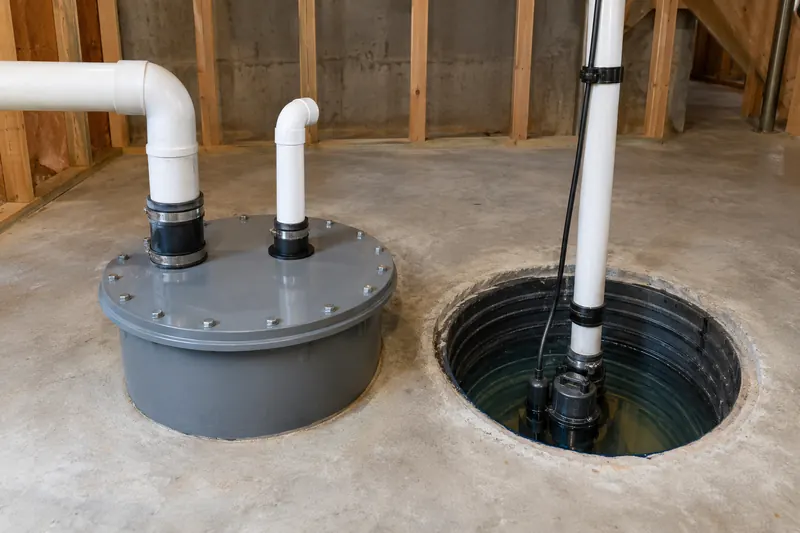
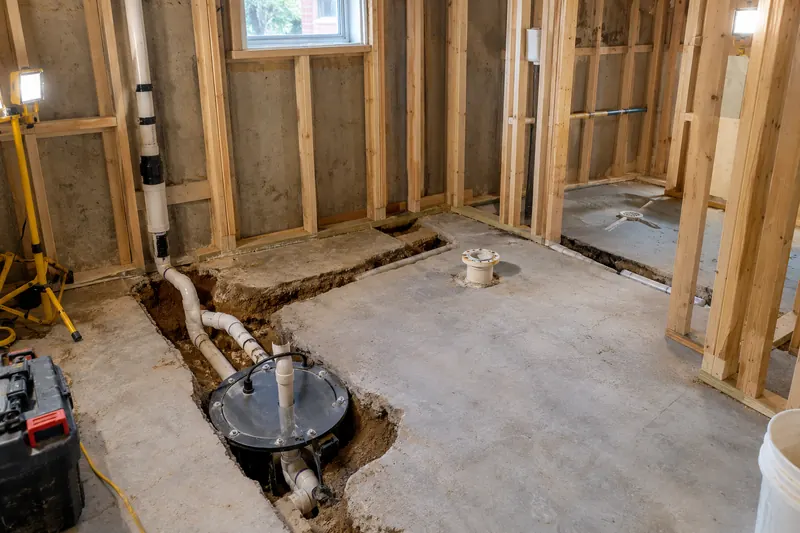
If the bathroom sits below the sewer line, its drains probably empty into an ejector basin under the floor. That basin holds sewage around the clock, and Liberty Pumps says sewage basins need sealed covers to contain sewer gas. A loose bolt, a torn gasket or an open hole where a cord or pipe passes through is enough to let it out.
Look from above without opening it. If anything seems loose or missing, call a licensed plumber; resealing a sewage lid so it's truly gas-tight isn't a weekend job. Can't tell the sewage basin from the sump pit? Read ejector pump vs sump pump.
Why does the basement bathroom smell like sewer only when something drains?
That pattern points to venting. The plumbing vent system lets air in and out so draining water doesn't pull on the trap seals; the model code limits the pressure swing at any trap to 1 inch of water column. When a vent is missing, blocked or undersized, draining water can siphon a trap partway empty, and you get gurgling followed by a whiff of sewer. Our page on basement drains that gurgle covers the noise side.
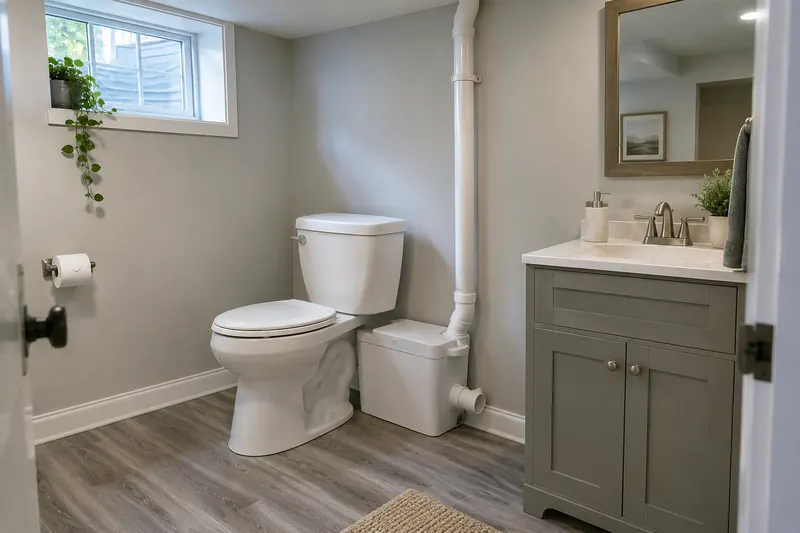
Pumped bathrooms add a wrinkle. Across WSSC's two counties, the 2024 WSSC code allows an air admittance valve on a sewage basin only as part of an engineer-designed vent. Some upflush makers forbid them too; see our upflush toilet pros and cons.
| Clue | Likely source | First check |
|---|---|---|
| Strongest at a shower or floor drain after a quiet stretch | Dry trap | Run water into the drain for a minute |
| Strongest near the ejector lid or its vent pipe | Basin seal | Look for loose bolts, gaps or open holes; call a plumber |
| Arrives with gurgling when fixtures drain | Venting | Have a plumber check the vent |
| Musty, worse in humid weather | Damp or mold | Measure humidity; look for leaks |
| Rotten-egg smell near gas appliances you can't place | Possible natural gas | Leave and call from outside |
Is it sewer gas, or is it damp?
Basements smell musty for reasons that have nothing to do with drains. EPA wants indoor air kept under 60 percent relative humidity, with 30 to 50 as the sweet spot, and asks you to dry any water-damaged area within 24 to 48 hours to head off mold. A small hygrometer settles the question fast. Found a damp wall or a slow leak? How fast mold starts explains the clock.
Find the smell in an afternoon
- Run water for a minute into every basement drain, including the floor drain and any unused shower.
- Wait a day; if the smell is gone, a dry trap was the cause.
- Look over the ejector lid from above for loose bolts, gaps or open holes, without opening it.
- Flush an upstairs toilet and listen for gurgling in the basement drains.
- Check humidity with a hygrometer and aim to stay under 60 percent.
- If the smell remains, call a licensed plumber to check the vent and seals.
The bottom line
A clean basement bathroom that smells like sewer is usually leaking gas from somewhere: a trap gone dry, a basin lid not sealed, or a vent that isn't letting the system breathe. Refill the traps first, check the ejector lid from above, then bring in a licensed plumber for vents and seals. If it smells musty rather than rotten, look at humidity.
Readers also ask
Why does the smell come and go?
Traps refill whenever the fixture is used, then slowly dry out again. A smell that fades after a shower and returns weeks later fits that pattern.
Can we just plug the unused floor drain?
Ask a plumber first. Floor drains handle water heater leaks and spills, and a trap primer or regular refill keeps the seal without losing the drain.
Could the toilet be the source?
Yes. A toilet that rocks or a seal at its base that has failed can let sewer gas into the room. A plumber can reset the toilet on a new seal.
Is sewer gas dangerous at the level we smell?
The smell isn't a gauge of danger: ATSDR notes the nose catches hydrogen sulfide at tiny levels, while much higher levels can dull the sense of smell. Find and fix the source rather than masking it.
Does a bathroom exhaust fan help?
It moves damp air out, which helps with musty smells. It won't fix a dry trap, a leaking lid or a bad vent; those need the real repair.
Where this answer comes from
- ATSDR (CDC): Hydrogen Sulfide ToxFAQs
- International Code Council: IPC 2012 on trap seals and vent pressure (archive.org)
- North Dakota DEQ: dry traps and indoor sewer odors
- Liberty Pumps: sealed covers on sewage basins
- WSSC Water: 2024 code limit on air admittance valves for sumps (archived copy)
- U.S. EPA: indoor humidity and drying times
- Washington Gas: Natural Gas Safety