My sump pump runs every few minutes even when it hasn't rained. Is that normal?
Answered by the column’s editors · · about 5 minutes to read
A sump pump running constantly in dry weather is sometimes just groundwater still draining, but a cycle every few minutes usually means a stuck float, a failed check valve, or a pit or pump that's the wrong size.
Short answer: it can be normal, but you shouldn't assume it is. A pump that kicks on now and then for days after a soggy week is doing its job. A pump that starts, empties the pit in seconds, stops, and starts again a minute or two later is a sign that something in the system is off.
The good news: a flashlight and a few minutes of watching usually tell you which one you have.
Is it ever normal for a sump pump to run in dry weather?
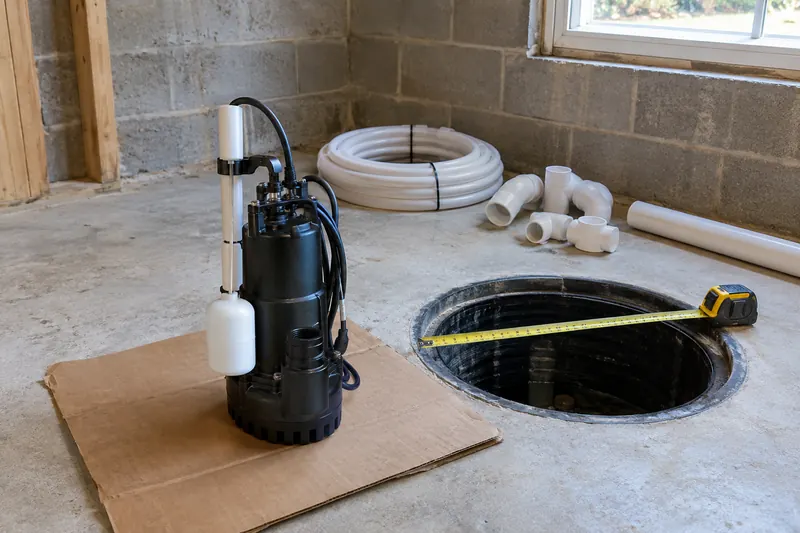
Yes. The pit collects water from the drainage around your foundation, and that doesn't stop when the rain does. Liberty Pumps describes the basic cycle simply: water enters the basin until the float switch starts the pump, which pushes it out through the discharge pipe.
So the honest test isn't the weather. It's whether new water flows into the pit between cycles. If you can see a trickle coming in from the drain openings after shutoff, the pump is answering real inflow. If the pit refills with no visible trickle, keep reading.
What makes a sump pump run constantly?
Liberty lists four common causes of constant running: too much water coming in, a stuck float switch, a failed check valve, or a pump that's too small for the job. For the start-stop-start pattern called short cycling, the same maker names a badly adjusted float, a basin that's too small, or heavy inflow.
| Pattern you see | Likely cause | What to check |
|---|---|---|
| Steady trickle in, long runs | Real groundwater inflow | Downspouts, where the discharge lands |
| Fast refill right after shutoff | Failed check valve | Water rushing back down the pipe |
| Runs but the level barely drops | Stuck valve, loose impeller, plugged pipe | Outside end of the line |
| Won't shut off | Float pinned up | Debris, cord or pit wall |
| Very short bursts | Small basin or tight float range | Pit diameter, float setting |
Is the check valve letting water fall back into the pit?
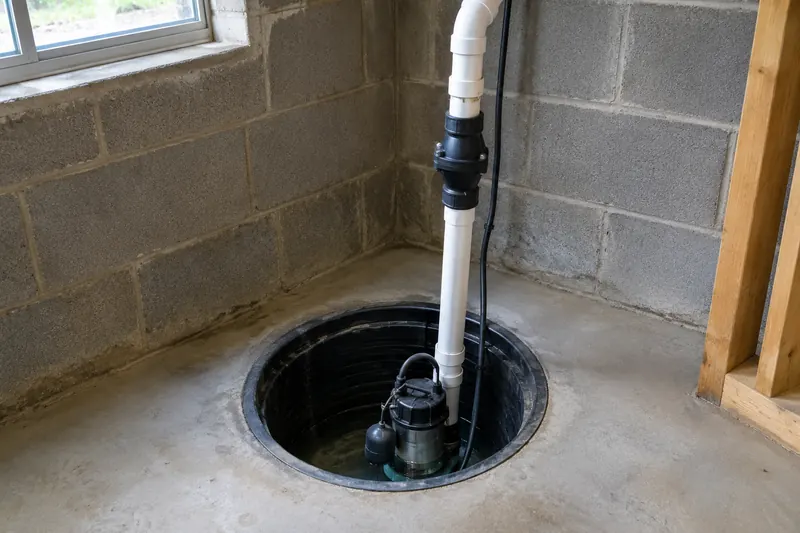
Start here. When the pump shuts off, every foot of water standing in the discharge pipe wants to drop back down. A check valve exists to stop that; Liberty says it keeps pumped water from flowing back into the basin, which cuts out needless cycling.
If the flapper is worn or stuck open, the pump moves the same water over and over. A rush in the pipe and a quick rise in the pit right after shutoff point straight at the valve. University of Illinois Extension recommends a swing-type check valve the same size as the discharge pipe, installed just above the pump.
Illinois Extension adds that a pump can run without moving water because of a stuck check valve, a loose impeller or a plugged pipe. Trapped air can do it too, as Zoeller's short video shows.
Could the float switch be stuck?
Easily. Anything that pins a float in the raised position keeps the motor running. Liberty says a failing float shows up as a pump that won't start, runs nonstop, or won't shut off, and suggests checking for debris before replacing the switch. A power cord or a pump shifted against the basin wall can do it too.
Is the pit or the pump the wrong size?
If the float and valve check out and the bursts are still short, the setup may be mismatched. A small basin fills in seconds, so the pump has to cycle. Illinois Extension also warns that an oversized pump will short-cycle and can fail early. The model plumbing code's minimum pit is 18 inches across and 24 inches deep, per the 2012 International Plumbing Code.
Sizing gets its own answer: what size sump pump a basement needs. If the pump is old as well as busy, see how long sump pumps last.
A ten-minute check
- Stand by the pit through two full cycles and time how long the pump runs and how long it rests.
- Watch the pit right after shutoff to see whether water trickles in from the sides or rushes back down the pipe.
- Unplug the pump from dry floor and look for anything touching or pinning the float.
- Walk outside while it runs and confirm water leaves the end of the line, well away from the foundation.
- Call a plumber if the check valve, impeller or pit size looks like the problem.
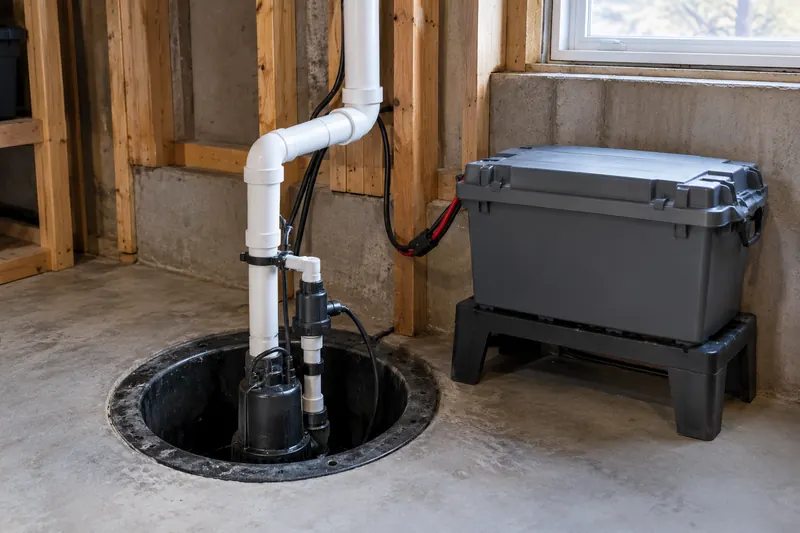
Water dumped right beside the house can soak back down and land in the pit again; see where sump pump water is allowed to go. And a busy pump plus a storm outage is the case for a battery backup.
The bottom line
A pump that runs on and off for a few days after wet weather is usually fine. Constant cycling with no rain points to a worn check valve, a float that can't drop, or a pit and pump that don't match. Watch a couple of cycles, check the float with the power off, and bring in a plumber for valve or sizing fixes.
Readers also ask
Does a sump pump running constantly raise the electric bill?
Yes, a motor that runs more uses more electricity. The bigger cost is wear, which is why short cycling deserves a fix.
Why does my sump pump run more in spring than in summer?
Long wet stretches and snowmelt leave more water in the soil around the foundation. Busy spring cycling with a quiet summer is usually inflow, not a fault.
Can the float be adjusted so the pump runs less often?
Sometimes, within the maker's range; Liberty lists a badly adjusted float as one cause of short cycling. Never set it so high that water nears the top of the pit.
Should a pump that won't stop running be unplugged?
Only to inspect it from dry floor, then plug it back in. If water really is coming in, an unplugged pump means a wet floor.
Is a pump that runs constantly about to fail?
Not necessarily. Find the cause first; a new pump on a bad check valve or a tiny pit will cycle just as much.