How do I know what size sump pump our basement needs?
Answered by the column’s editors · · about 5 minutes to read
What size sump pump you need comes down to two numbers, not horsepower: how many gallons per minute flow into your pit, and the total head the pump has to push that water against.
Here's the thing about the horsepower on the box: it describes the motor, not whether the pump suits your basement. Two pumps with the same rating can move very different amounts of water once the pipe climbs the wall.
So the answer is a little homework instead of a rule of thumb: measure what comes into your pit, work out how hard the pump has to push, and match both to a pump's published chart.
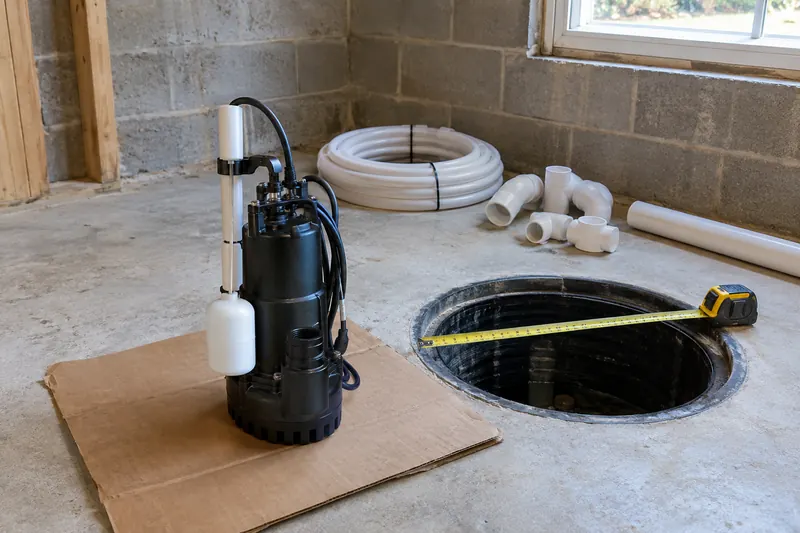
Why isn't horsepower the way to size a sump pump?
Because flow and pressure are what matter. Zoeller, one of the big pump makers, puts it plainly: pump size is less about physical size than about the flow a pump produces and the pressure it can handle. University of Illinois Extension says the same thing in practical terms: most sump pumps come with charts or curves showing gallons per minute at each height, and that's what you choose from.
You'll see horsepower recommendations all over the internet. We couldn't confirm a maker's table tying horsepower to basement conditions, so we won't give one. The curve on the spec sheet is the honest guide.
How do you measure how fast water comes into the pit?
Illinois Extension's ruler method is the simplest test there is. During a heavy rain, let the pump empty the pit, then measure how many inches the water rises in 60 seconds. In an 18-inch basin, each inch is about 1 gallon. In a 24-inch basin, each inch is about 2 gallons. Inches per minute times that number gives you gallons per minute.
Most homes have the 18-inch size. If more than 30 gallons a minute come in, Illinois Extension says a 24-inch basin is the better choice.
Building new? The factsheet suggests planning for 14 gallons per minute per 1,000 square feet on sandy soil and 8 on clay.
Measure and size, step by step
- Wait for a heavy, steady rain and let the pump empty the pit.
- Unplug the pump from dry floor, then time 60 seconds with a ruler standing in the pit.
- Plug it straight back in and convert inches to gallons per minute for your basin size.
- Measure the vertical lift from the pit's low water level to where the pipe leaves the house.
- Count the pipe length and fittings so a plumber or the maker's chart can add friction loss.
- Pick a pump whose curve delivers your gallons per minute at that total head, with some margin.
What is total head, and how do you add it up?
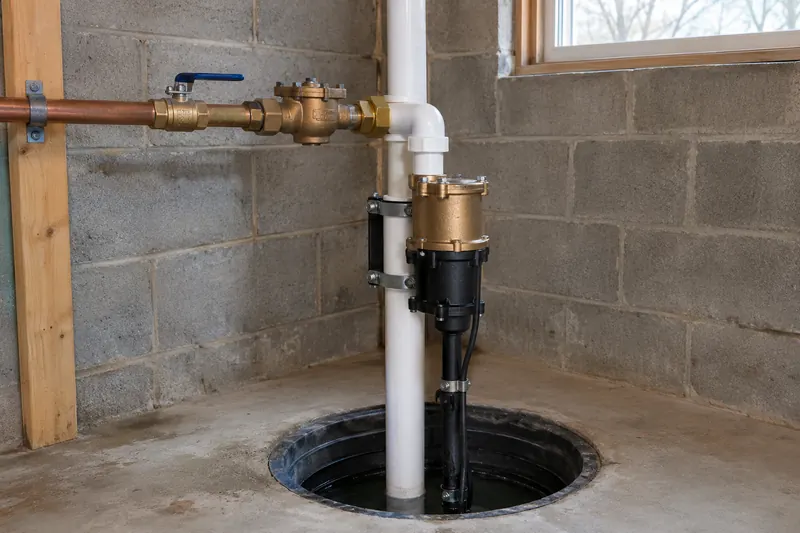
Total head is the resistance the pump works against, measured in feet. Illinois Extension breaks it into two parts: static head, the straight vertical lift, plus friction head, the drag from pipe length, elbows and the check valve.
Static head takes a tape measure. Friction head depends on pipe size and length, so read it from the maker's tables or ask the plumber. In the factsheet's worked example, the pump needed 18 gallons per minute at 20 feet of total head. That pair of numbers, not horsepower, is what you look for on a curve.
| Number | How you get it | Why it matters |
|---|---|---|
| Inflow (gallons per minute) | Ruler test during heavy rain | The flow the pump must keep up with |
| Static head (feet) | Tape measure, pit to exit point | Vertical lift the pump fights |
| Friction head (feet) | Maker's friction tables or a plumber | Pipe length and fittings add drag |
| Total head (feet) | Static plus friction | Where you read the pump curve |
| Basin diameter | Measure across the pit | Sets gallons per inch and run time |
What happens if the pump is too big or too small?
Too small, and it can't keep up in a downpour; Liberty Pumps lists an undersized pump as one cause of a pump that never stops. Too big, and it empties the pit in seconds and short-cycles, which Illinois Extension says can wear it out early. Both problems show up as odd cycling, covered in the answer on a pump that cycles every few minutes.
Does the pit itself need to be bigger?
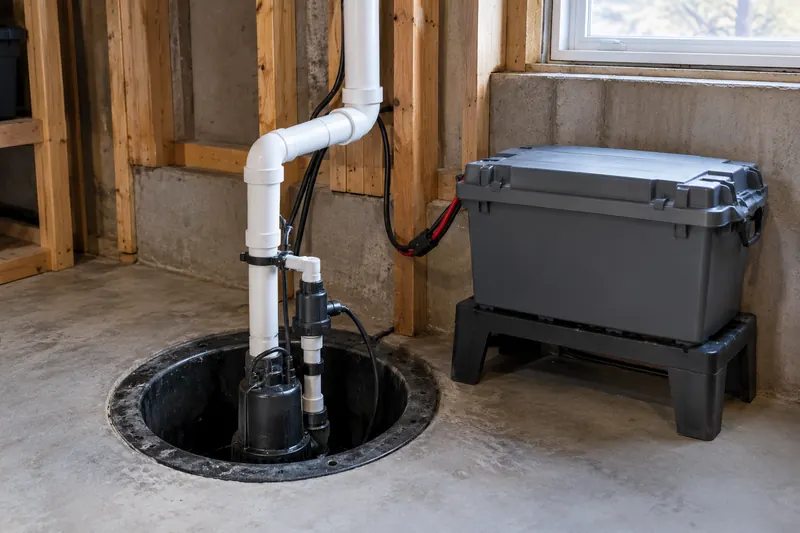
Sometimes. The model code wants at least an 18-inch-wide, 24-inch-deep pit, per the 2012 International Plumbing Code, and Zoeller sells an 18 by 30 inch basin for pits that need more room. If you plan to add a battery backup pump or a water-powered backup, the second pump needs space in the pit too.
For homes served by WSSC Water, its code leaves the storm-drainage chapter, sumps included, to the county building official. Elsewhere, ask the county office in who issues plumbing permits before you enlarge a pit or move the line.
The bottom line
Size a sump pump by measured inflow and total head, not horsepower. Time the pit in a heavy rain, measure the lift, let the maker's friction tables or a plumber add the rest, and choose the pump whose curve covers that point with room to spare.
Readers also ask
Is a bigger sump pump always safer?
No. An oversized pump short-cycles and can fail early. Matching the curve to your inflow beats buying the largest model.
Does a longer discharge line change the pump size?
It can. Every extra foot of pipe and every elbow adds friction head, so a pump that's fine with a short line may fall short when the line runs far across the yard.
What size discharge pipe goes with a sump pump?
Follow the pump maker's outlet size and instructions, and match the check valve to the pipe; Illinois Extension suggests a swing-type valve sitting right above the pump.
Can the ruler test be done without rain?
Not usefully. You want inflow at its worst, so a dry-day reading will undersize the pump.
Should the backup pump match the main pump?
It doesn't have to, but check the backup's own performance chart against your inflow and lift so you know what it can and can't keep up with.
Where this answer comes from
- Illinois Extension factsheet, 2005: Sizing Up a Sump Pump (archived copy)
- Zoeller Pump Co.: The Importance of Pump Sizing and Installation
- Zoeller Pump Co.: Basement Sumps
- Liberty Pumps: FAQs, page 31
- ICC: 2012 IPC, sump pit rules
- WSSC Water: code effective December 2025, storm drainage section (archived copy)