It's the water heater (or the corner it sits in)
Where should the dehumidifier and AC condensate drain in the basement?
Answered by the column’s editors · · about 5 minutes to read
Without a condensate pump, basement condensate runs downhill to a floor drain, laundry sink or standpipe; the pump lifts it there when no drain sits lower. WSSC never allows a direct sewer-pipe connection.
A basement in a Maryland summer makes a surprising amount of water. The air conditioner coil drips, a high-efficiency furnace makes condensate in winter, and the dehumidifier fills its bucket every day or two. All of it needs somewhere to go that isn't the floor.
The good news is that the options are few and well defined. The less good news is that the easy-looking shortcut, splicing the tube into the nearest drain pipe, is the one the code rules out.
Where is condensate allowed to drain?
For homes on WSSC Water, the utility's code says condensate drains shall not directly connect to any sanitary drain, waste or vent pipe. Instead they may discharge to a floor drain, floor sink, trench drain, mop sink, hub drain, standpipe, utility or laundry sink, or another approved receptor.
That squares with another part of the same code, which lists air conditioning condensate among illegal sewer discharges unless the code allows it. Read together, condensate may reach the sanitary system only indirectly, by dropping into one of those listed receptors. Outside WSSC, the county permit office applies its own version of the model code; ask it if you're unsure.
What about the high-efficiency furnace?
Condensing (high-efficiency) furnaces and water heaters are treated differently. WSSC's code requires their condensate to be appropriately neutralized and run to an approved fixture, in pipe no smaller than the appliance's drain connection. Installing and servicing that neutralizing setup is a job for the HVAC contractor.
How should the line run?
Downhill, steadily. The mechanical code requires condensate from cooling coils to be piped to an approved place at a slope of at least 1/8 inch per foot. A sag in a long tube holds water, grows slime and eventually backs up into the drain pan.
Where an overflow could cause damage, the code also wants a backup. One option is an auxiliary pan beneath it, 1-1/2 inches deep or more and 3 inches bigger than the unit, with its own drain ending somewhere you'll notice. In a finished basement, that's the difference between a stain on the ceiling and a warning drip in plain sight.
When do we need a condensate pump?
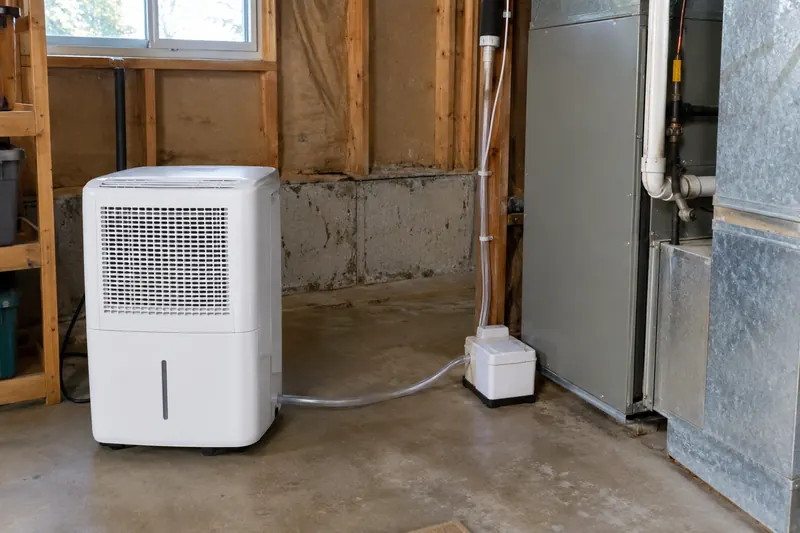
When there's no receptor lower than the equipment. A condensate pump is a small reservoir with a float switch: Liberty Pumps describes it as collecting water until the level rises high enough to switch on, then pumping it to a suitable drain. The discharge tube can climb to a laundry sink or standpipe across the room, and that receptor still needs the open air gap described above.
These pumps plug into an outlet. No receptacle close by? Have a licensed electrician add one rather than stringing an extension cord.
| Equipment | Typical drain path | Notes |
|---|---|---|
| Central AC coil | Gravity line or condensate pump to a floor drain or standpipe | Auxiliary pan or other overflow protection where leaks could cause damage |
| High-efficiency furnace or water heater | Through a neutralizer to an approved fixture | WSSC requires neutralizing |
| Portable dehumidifier | Hose to a floor drain or sump pump, or empty the bucket | ENERGY STAR lists both drain options |
| Whole-home dehumidifier | Floor drain or condensate pump | ENERGY STAR says an HVAC pro should route it |
Where should the dehumidifier drain?
ENERGY STAR says a portable unit's hose can go to a floor drain or a sump pump, and that whole-home units should be routed to a floor drain or condensate pump by an HVAC professional during installation. A sump pit works because its pump sends water outdoors, which is where it belongs; our sump discharge answer explains the rules.
Two tips while you're at it. ENERGY STAR notes that frost can form on the coils when the air drops below about 65°F, so a cold basement may call for a low-temperature model. And the goal is a number, not a feeling: EPA wants basement air kept under 60 percent, and a reading between 30 and 50 is better still. Already noticing a musty smell? Our mold timing answer is the next read.
The bottom line
Basement condensate goes to a floor drain, sink, standpipe or sump pit, never straight into a sewer pipe. Keep the line sloped at least 1/8 inch per foot, add overflow protection where a leak would do damage, neutralize high-efficiency appliance condensate, and use a condensate pump when gravity won't do it.
Readers also ask
Can the AC condensate line go into the softener's drain?
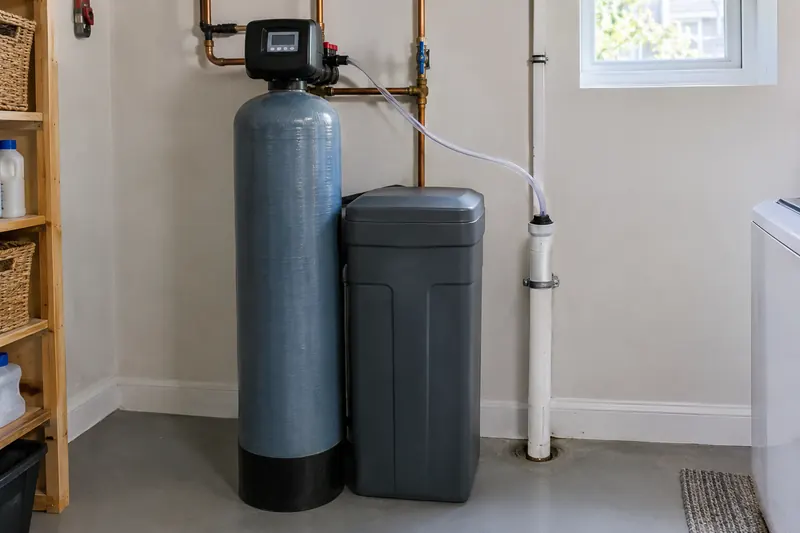
It can share a receptor, like a laundry standpipe, if each tube ends with its own air gap. Our answer on where a softener can drain covers air gaps.
Why does the condensate pump keep beeping or overflowing?
A clogged tube, a stuck float or a failed pump are common causes. Turn the equipment off, clean the reservoir, and call an HVAC pro if it continues.
Can condensate drain outside?
Often, yes, if your county allows it. Make sure the line can't freeze in winter and doesn't dump next to the foundation.
Do we have to neutralize AC condensate?
WSSC's neutralizing rule covers condensing appliances like high-efficiency furnaces. Ordinary AC coil condensate goes to an approved receptor without it.
How often should a dehumidifier run?
As often as it takes to hold the basement below 60 percent humidity, EPA's upper limit. A cheap hygrometer tells you whether it's working.