The alarm on our ejector pump is going off. What now?
Answered by the column’s editors · · about 5 minutes to read
An ejector pump alarm means sewage in the basin has climbed above its normal level. Stop running water into anything that drains downstairs, stay clear of any overflow, and get a licensed plumber out.
That sound is a float switch doing its job. Liberty Pumps explains that a high-water alarm goes off when the liquid rises above its normal level, either because the pump isn't working or because more is flowing in than the pump can move (Liberty Pumps FAQ). Either way the basin is filling, and what's in it is sewage.
The good news: an alarm is meant to sound before the basin overflows, so you usually have a little time. Use it to stop feeding the basin.
What does an ejector pump alarm actually mean?
Either the pump has stopped (no power, a stuck or failed float switch, a worn-out motor), or it's running but losing the race (a jammed impeller, a clogged discharge, a check valve letting water fall back, or a burst of inflow like a washer draining while someone showers).
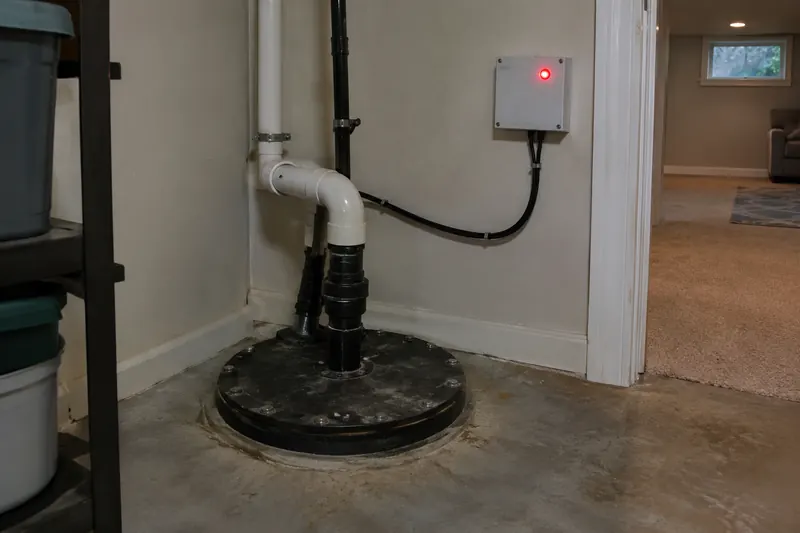
A typical alarm is simple hardware. Liberty's ALM-2, for example, is a float-switch panel with an 86 dB horn and a warning light, rated for sump, effluent or sewage basins, and it plugs into a regular outlet with a 9-volt battery backup. That battery lets the alarm keep sounding in an outage, after the pump has stopped. The Zoeller video below shows how this kind of alarm works and how to silence it.
Ejector pump alarm: what do you check first?
| What you notice | Likely cause | What to do |
|---|---|---|
| Alarm on, pump silent | No power, tripped GFCI or breaker, stuck float | Check power only from a dry floor; call a plumber if it doesn't restart |
| Pump runs or hums, level keeps rising | Jam, clogged discharge or failed check valve | Stop all water downstairs and call a plumber |
| Alarm after a big laundry load, then clears | Inflow briefly beat the pump | Space out loads; have a plumber check the sizing |
| Alarm during a power outage | Pump has no power | Use no water downstairs until power returns |
| Sewage on the floor | The basin overflowed | Stay out until the power is off, then clean up as sewage |
When the ejector alarm sounds
- Stop all water use that drains to the basin, and tell everyone in the house.
- Silence the alarm with its switch, if it has one, but leave it plugged in.
- From a dry spot, look at the floor around the basin and outlets; if it's wet, stay out.
- If the floor is dry, check whether the pump's breaker or GFCI outlet has tripped and reset it once.
- Listen: a pump that hums without moving water, or never shuts off, needs a plumber.
- Call a licensed plumber, and keep water use downstairs at zero until the alarm clears.
If it trips again right after a reset, leave it for a licensed electrician or plumber. FEMA says a breaker box you can only reach by wading is an electrician's call.
Why does the ejector alarm keep going off?
An alarm that keeps coming back points to a part wearing out or a system that's too small for how the household uses it. Zoeller's sizing advice wants each run to last half a minute or longer, with six starts an hour at most, so a pump that short-cycles all day is worth a look.
Float switches are another suspect. Liberty says a bad one shows up as a pump that never kicks on, or one that keeps going and doesn't stop when it should. The check valve on the discharge should keep pumped sewage from draining back into the basin, and the code pairs it with a full-open valve so a plumber can isolate the line for repairs.
Can you open the basin and fix it yourself?
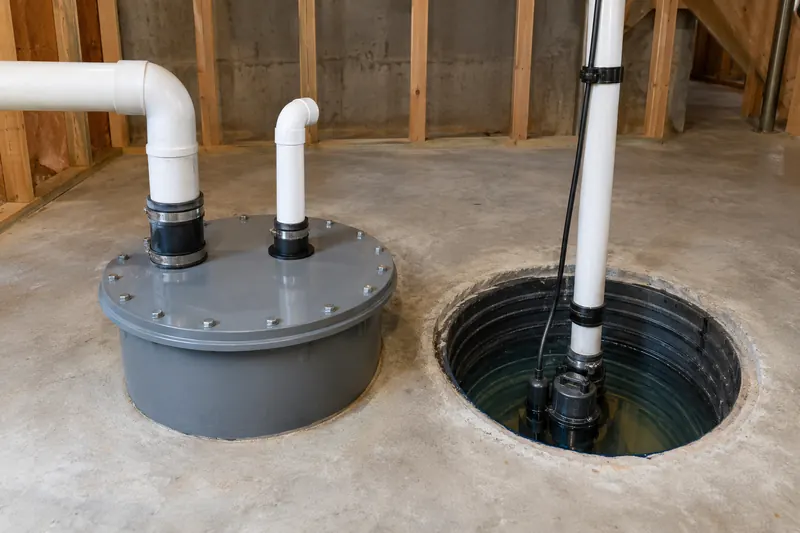
Not a good idea. The lid is sealed because sewage basins need gas-tight covers to hold in sewer gas, and the vent and cord seals have to go back together properly. Underneath is a pump sitting in sewage, wired to household power. Repairs are licensed plumber work, and in the two WSSC counties the plumber must be registered with WSSC Water. Not sure which basin is which? See ejector pumps vs sump pumps.
What if sewage already came up?
Treat it as a sewage spill. CDC wants rubber boots, gloves and goggles on whoever cleans, kids and pets elsewhere until the job is finished, and sewage-soaked drywall, insulation and carpet gone. Our sewage cleanup steps go further, and whether insurance pays depends on a backup endorsement.
The bottom line
An ejector alarm is an early warning, not a disaster yet. Stop sending water to the basin, stay away from wet floors and outlets, check power only if the floor is dry, and call a licensed plumber. If it keeps happening, have the pump, float and check valve looked at, and the system's sizing too.
Readers also ask
Can we keep using the upstairs bathrooms?
Fixtures above the sewer line normally drain by gravity and bypass the ejector. Unsure of your piping? Go easy until the plumber confirms.
Is it safe to unplug the alarm?
Silence it instead, if it has a switch. Unplugged, it can't warn you when the level rises again.
Why did the alarm go off during a storm?
If the power went out, the pump stopped while the alarm kept going on its battery. Hold off on water downstairs until power is back and the pump catches up.
Can a plumber add an alarm if our ejector doesn't have one?
Yes. Liberty says an alarm isn't always required but recommends one, and stand-alone units for sewage basins plug into a standard outlet.
Does homeowners insurance cover an ejector overflow?
The Maryland Insurance Administration says sewage that comes in through drains may be covered only with a water/sewer back-up endorsement.
Where this answer comes from
- Liberty Pumps: high-water alarms and float switches
- Liberty Pumps: ALM-2 indoor high liquid level alarm
- Liberty Pumps: why sewage basins have sealed lids
- Zoeller Pump Co.: cycle times when sizing a sewage pump
- FEMA: standing in water to reach a breaker box (PDF)
- WSSC Water: plumber registration for backup work (archived copy)
- Maryland Insurance Administration: what a back-up endorsement covers (archived copy)
- CDC: protective gear and what to discard after sewage gets in